Episode #330: Why Midlife Weight Loss Stops Working (Even When Labs Are “Normal”) with Shay Pascale
Feb 24, 2026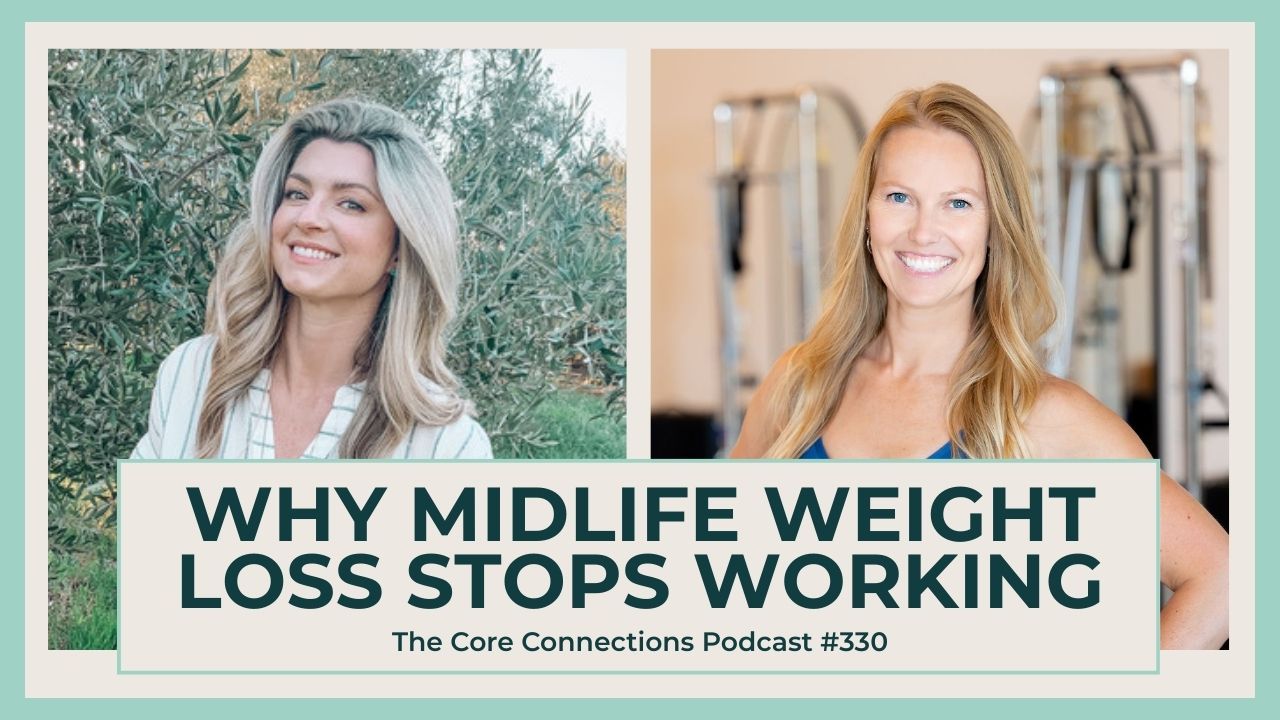
“Why Nothing Works” in Midlife Weight Loss — The Real Foundations (Protein, Muscle, Gut Health) with Shay Pascale
If you’ve ever felt like you’re doing all the “right” things — eating clean, working out, staying consistent — and yet your body won’t budge… you’re not alone.
In this episode of Core Connections, I’m joined by my friend Shay Pascale, who helps midlife women with gut and hormone issues shed fat and get fit even when their labs are “normal” and nothing seems to work. And I love her approach because it’s the opposite of diet culture: no extreme restriction, no shiny-object hopping, and no blaming your body.
We talk about what actually drives sustainable body composition change in midlife (hint: it’s not just “eat less, move more”), why muscle is a metabolic game-changer, how under-eating can stall progress, and why Shay goes upstream to the gut when clients feel stuck — even if they’re “checking all the boxes.”
>>LISTEN HERE ON APPLE PODCAST<<
Episode Timeline
-
01:08 Intro + “labs are normal but I don’t feel normal”
-
02:36 Foundations of metabolic health in midlife
-
03:57 Protein + macros + building muscle (body recomposition)
-
05:43 Under-eating + reverse dieting
-
07:07 Amino acids (BodyHealth) — when they help
-
08:31 Creatine dose + cognition benefits
-
10:59 When “doing everything right” still doesn’t work (FDN lens)
-
11:35 Gut symptoms, absorption issues, and root causes
-
15:56 CGMs + rising A1C + prevention
-
16:24 Why pushing harder can backfire
-
17:49 “Your body isn’t a calculator” + simplifying the plan
-
20:33 Common patterns seen on labs (zooming out vs single issue focus)
-
25:02 GLP-1s: tool vs caution + gut-first approach
-
30:21 Investing in health (house analogy)
-
32:25 Why standard bloodwork misses early dysfunction
-
37:42 One thing to start today: high-quality protein
What We’re Really Talking About When We Say “Weight Loss”
I’ll be honest — I don’t love the weight loss conversation when it’s rooted in dieting, restriction, and punishment.
But I do love the conversation when it’s really about metabolic health, energy, and rebuilding a body that feels strong and resilient.
Shay shared a framework that’s refreshingly simple:
Eat for muscle. Train for muscle.
That’s the foundation of body recomposition.
As women move through midlife, many of us experience muscle loss, which impacts how our bodies handle carbs, how efficiently we burn fuel, and how easily fat is stored. So the strategies that “worked” in our 20s — like just cutting sugar for a few weeks — often stop producing results.
The Midlife Reset: Protein + Progressive Strength Training
If you’re tired of hearing about protein… I get it. But Shay said it clearly:
If we can’t fix this foundational piece, we don’t even move forward.
Key points Shay emphasized:
-
Prioritize protein as the anchor macronutrient for metabolism and muscle support.
-
Focus on chewable protein (not just powders/collagen).
-
Spread protein across the day (often 3–4 meals works best).
-
Pair nutrition with progressive strength training (training that actually challenges the muscles over time).
And the why matters: protein provides the raw materials your body needs to rebuild. Not just for muscle — but for cellular function, recovery, and energy.

The Problem Shay Sees Constantly: Under-Eating
So many women aren’t eating enough, especially if they’ve lived in diet culture for years.
Shay often uses a strategy called a reverse diet, where calories are gradually increased (often 50–100 calories/week) to find a “sweet spot” where the body can finally respond again.
And yes — sometimes women lose weight while eating more, because:
-
food quality improves,
-
training becomes more effective,
-
metabolism adapts,
-
and the body stops operating in a depleted, stressed state.
Supplements: Amino Acids + Creatine (When They Make Sense)
We also touched on supplements that can be supportive when used appropriately.
Amino acids
Shay sees them as potentially helpful for women who:
-
struggle to digest enough protein,
-
have food sensitivities,
-
or simply can’t hit their protein targets consistently.
From my personal experience, I’ve noticed amino acids can help support energy on longer studio days when lunch gets pushed too late (and yes, ideally I’d just eat on time — but real life happens).
Creatine
Shay’s typical starting dose: 5 grams/day.
She noted that beyond strength benefits, the biggest effect she personally notices is cognition and mental clarity — which is a powerful conversation in an aging population where brain health matters more than ever.
“I’m Doing Everything Right… Why Am I Still Stuck?”
This is where Shay’s FDN approach really shines.
When the basics are in place and results still aren’t happening, she starts looking for what’s going on “under the hood,” especially patterns like:
-
IBS symptoms
-
chronic constipation or diarrhea
-
histamine issues (daily allergy meds)
-
skin flare-ups
-
migraines
-
bloating
-
poor nutrient absorption
-
blood sugar trends creeping up year over year
Shay’s perspective:
If your gut is a mess, it can drive downstream dysfunction — including hormone disruption.
She often starts with comprehensive stool testing (GI mapping) and may also use tools like a continuous glucose monitor (CGM) for early blood sugar insight, especially when A1C is trending upward.
And I loved what she said here: it’s not a willpower problem.
If your body feels like it’s “betraying you,” it’s often a health signal — not a personal failure.
The Fitness Trap: “Push Harder” Can Backfire
We talked about the cultural message of “go hard or go home” — and why that mindset can work against you when your body is depleted.
Shay shared how she sometimes starts clients with:
-
walking only for movement,
-
while focusing on nutrition first,
-
and turning up training later when energy returns.
Because your body isn’t a calculator.
And the order matters:
-
fuel for results
-
address gut + absorption
-
support hormones + optimization
Trying to do everything at once is often what keeps people stuck.

The GLP-1 Conversation: Tool or Trap?
GLP-1 medications (and peptides) are everywhere right now.
Shay’s take is balanced:
-
They can be a tool.
-
They also can be used in a way that creates long-term issues if the foundations aren’t addressed.
She’s seeing many women who:
-
lose weight on GLP-1s, then regain after stopping,
-
or see little response,
-
or develop GI side effects and motility issues.
Her point: if someone is considering GLP-1s, she wants their gut, liver, and gallbladder support in a good place first — and she still wants the foundation of muscle-centric nutrition and strength training so it’s not a lifelong dependency.
And I’ll add this: if lifestyle doesn’t change, it becomes a band-aid — not a solution.
The Big Difference Between Standard Labs vs Functional Testing
One of my favorite parts of this conversation is how Shay explained the gap between:
-
what most doctors test (bloodwork that tends to stay stable until things have been brewing a long time), and
-
what functional practitioners look at to catch patterns earlier.
Shay’s view:
Bloodwork is often better at keeping you alive (reactive care).
Functional testing is about getting ahead of chronic patterns before they become bigger problems.
If You Do ONE Thing Starting Today…
Shay’s answer was simple and powerful:
Start with the type and amount of protein you eat every day.
Because food is information — and protein provides the raw materials for repair, rebuilding, and resilience.
And I loved how this came full circle into family health too: when moms feel better, the whole household benefits. It’s never “just about weight.”
Episode Resources
-
Shay’s website: thebodybulletin.com
-
Free masterclass: thebodybulletin.com/masterclass
-
Instagram: @thebodybulletin
-
TikTok: @shaypascale
Want more Core Connections?
If you loved this episode, make sure you’re subscribed so you don’t miss what’s coming next — we’re continuing to bridge the gap between movement, deep core function, and whole-body health in a way that actually makes sense in real life.