

Episode 327: Burnout Isn’t in Your Head: How Cortisol, Minerals, and Digestion Affect Weight & Energy with Monika Eva
Feb 03, 2026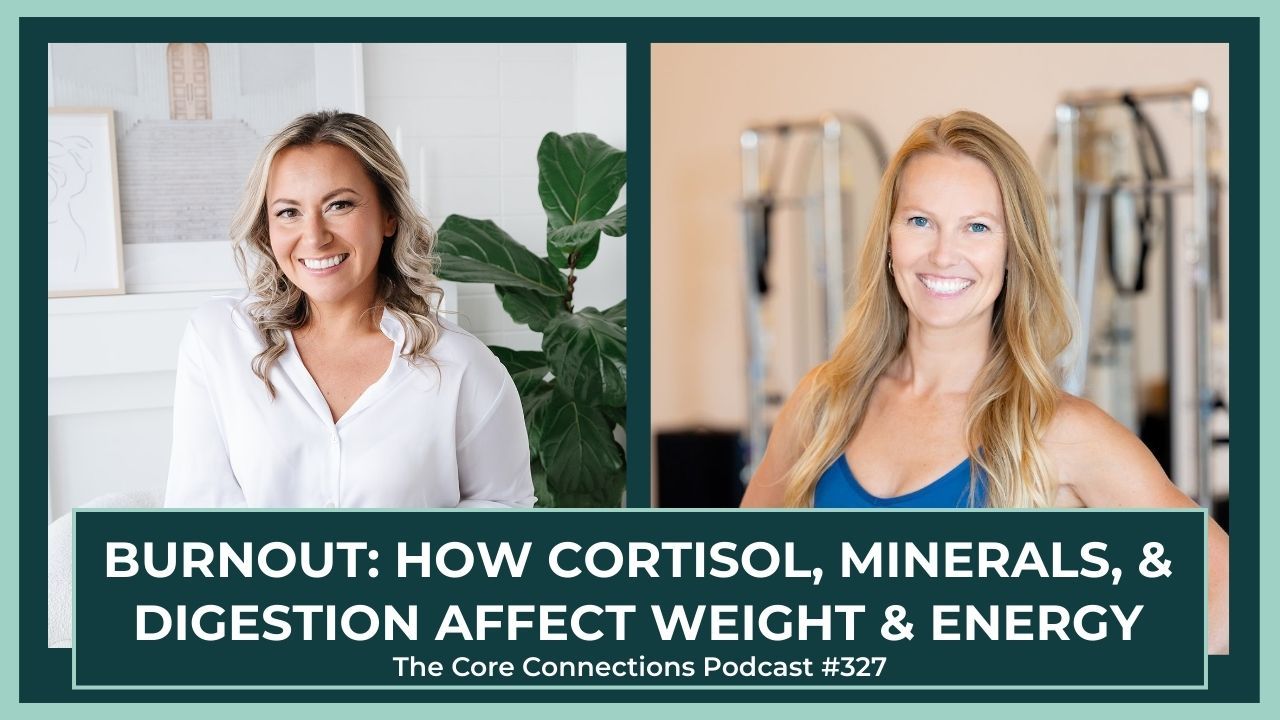
Why You’re Doing Everything “Right” — But Still Exhausted, Gaining Weight, and Burned Out
If you’re working out consistently, eating “clean,” watching your calories, and still feeling exhausted, inflamed, and stuck with stubborn weight — this conversation is for you.
On a recent episode of the Core Connections Podcast, I sat down with Monika Eva, Hormone Nutritionist, to unpack what’s actually happening beneath the surface for so many women. And spoiler alert: it’s not a lack of discipline, willpower, or effort.
It’s often burnout, cortisol dysregulation, mineral depletion, and poor nutrient absorption — and most women don’t even know it’s happening.
>>>LISTEN HERE ON APPLE<<<
04:47 Monika's Journey to Hormone Nutrition
10:34 Understanding Cortisol and Stress
17:40 Testing and Diagnosing Cortisol Levels
22:29 The Importance of Mineral Balance
22:54 The Importance of Calcium and Its Cofactors
24:51 Understanding Nutrient Absorption
26:55 Improving Gut Absorption
29:37 Identifying Gut Pathogens
32:53 The Role of Stress in Gut Health
36:14 Preparing the Body for Detoxification
39:36 Trusting Your Body and Self-Advocacy
From “Healthy” to Burned Out: Monika’s Wake-Up Call
Monika shared her own turning point — one many women will deeply relate to.
In her mid-20s, she was:
-
Working out twice a day
-
Meticulously tracking macros
-
Eating “all the right foods”
-
Living in a constant calorie deficit
Instead of losing weight, she gained over 20 pounds, mostly in her midsection. Her energy tanked. Motivation disappeared. Sleep felt unrefreshing. And yet, from the outside, she was doing everything “right.”
The missing piece?
Her body was in full-blown burnout.
Once Monika addressed her hormones, gut health, mineral depletion, and hidden stressors, she lost over 25 pounds in under six months — without trying harder.
That experience is what led her to the work she does today, helping thousands of women finally understand why their bodies feel stuck.
Cortisol: The Stress Hormone Everyone Is Talking About (But Often Misunderstands)
Cortisol gets a bad reputation — and for good reason — but here’s the truth:
Cortisol is not the enemy.
We actually need cortisol.
Cortisol:
-
Helps you wake up in the morning
-
Regulates blood pressure
-
Supports energy, focus, and resilience
The problem isn’t cortisol itself — it’s cortisol dysregulation.
High vs. Low Cortisol (and Why Low Is More Common Than You Think)
Many women assume they have high cortisol because they’re stressed. But what we see clinically (and in functional testing) is often the opposite.
After prolonged stress from:
-
Under-eating
-
Over-exercising
-
Poor recovery
-
Gut infections
-
Emotional stress
…the body can no longer keep up.
Instead of high cortisol, we often see low cortisol — a sign of adrenal exhaustion and burnout.
Common signs include:
-
Extreme fatigue in the morning
-
Hitting snooze multiple times
-
Feeling wired at night but exhausted all day
-
Low motivation and brain fog
This is why women are told, “Your labs are normal,” yet feel anything but normal.

Why Blood Tests Miss Cortisol Problems
One of the biggest takeaways from our conversation:
Blood cortisol testing is not enough.
Blood tests only show a snapshot of cortisol at one moment in time — often used to rule out disease, not functional imbalances.
Monika uses the DUTCH Plus Test, which looks at:
-
Cortisol patterns throughout the day
-
Free and metabolized cortisol
-
Sex hormones
-
How well your body produces and clears hormones
This gives a much clearer picture of why symptoms are happening — not just whether something is technically “in range.”
Minerals: The Missing Foundation for Energy, Hormones & Recovery
One of the most overlooked — yet critical — pieces of burnout recovery is mineral balance.
When cortisol is depleted, minerals often are too.
The most common pattern Monika sees?
-
Low magnesium
-
Low sodium
-
Low potassium
-
Low calcium (or improperly utilized calcium)
Minerals are the spark plugs of the body. Without them:
-
Hormones can’t function properly
-
Energy production drops
-
Detoxification slows
-
Recovery becomes impossible
This is why random supplementation — especially calcium alone — can actually make symptoms worse.
Minerals must work together, alongside adequate vitamin D3 and K2, proper digestion, and absorption.
You’re Not What You Eat — You’re What You Absorb
You can eat the cleanest, most nutrient-dense diet in the world…
…but if your digestion isn’t working, your body still won’t benefit.
Signs of poor absorption include:
-
Low energy despite eating well
-
Bloating or discomfort
-
Heartburn
-
Sugar cravings
-
Mood swings
-
Difficulty building muscle
Low stomach acid (often mistaken for high acid) is incredibly common — especially in burned-out women.
Simple first steps Monika recommends:
-
Slow down while eating
-
Sit down, breathe, and chew thoroughly
-
Add bitter foods (arugula, bok choy, leafy greens)
-
Consider digestive bitters or enzymes
-
Support stomach acid before suppressing it
Gut Infections: Candida, H. pylori & Hidden Stressors
Hidden gut infections can place enormous stress on the body, even without dramatic digestive symptoms.
Candida may show up as:
-
Intense sugar cravings
-
Recurrent yeast infections
-
Skin issues or itchiness
-
White tongue or oral thrush
H. pylori often shows up as:
-
Chronic heartburn
-
Low stomach acid
-
Poor nutrient absorption
These infections don’t just affect digestion — they can disrupt cortisol, progesterone, and overall hormone balance.
The key takeaway?
Eradication should never come before foundation.
Minerals, digestion, nervous system support, and detox pathways must be addressed first — or protocols can backfire.
The Bigger Picture: Trust Your Body
One of the most powerful reminders Monika shared:
If you’re being told everything is “normal,” but you don’t feel good — it’s not in your head.
Burnout isn’t normal.
Constant exhaustion isn’t normal.
Feeling stuck despite doing everything “right” isn’t normal.
There are answers — and there are ways to support your body back into balance.
Learn More & Go Deeper
✨ Connect with Monika Eva
-
Free Weight Loss & Energy Blocker Assessment
👉 https://www.monikaeva.com/whatsblockingyou -
Instagram
👉 https://www.instagram.com/monikaeeva -
Website
👉 https://www.monikaeva.com -
Digestion Resources
👉 https://www.monikaeva.com/digestion
About Monika Eva
Monika Eva is a Hormone Nutritionist who has helped thousands of women release stubborn weight, regain their energy, and feel confident in their bodies again — especially those who feel stuck despite doing everything “right.”
🌿 Explore Erica's Programs
-
Core Rehab Program® – Learn how to support your body from the inside out through intelligent movement and recovery: www.ericaziel.com/core-rehab
-
Instructor Training Courses – For professionals who want to deepen their understanding of the nervous system, core function, and whole-body health: https://www.ericaziel.com/instructors
👉 Learn more at ericaziel.com


