

Episode #328: Peptides Explained: Healing, Weight Loss & Hormone Support with Dr. Kela Smith
Feb 10, 2026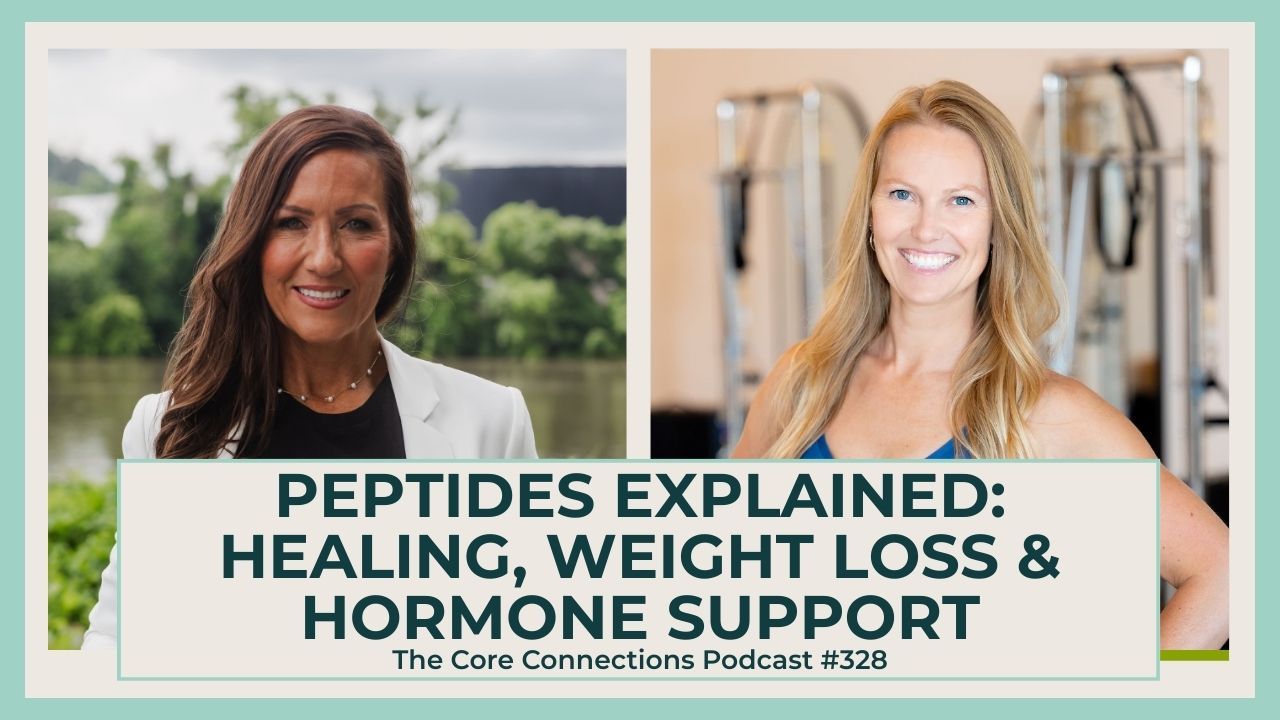
Peptides, Healing & Holistic Health: A Functional Medicine Conversation with Dr. Kela Smith
Peptides are everywhere right now — from gut healing and recovery to beauty, energy, and weight loss. But what are peptides really, and how do they fit into a truly holistic approach to health?
On this episode of the Core Connections Podcast, I sat down with Dr. Kela Smith, PhD, to have a grounded, functional medicine conversation about peptides — what they are, how they work, who they’re for, and why they should always be layered on top of strong lifestyle foundations.
This episode is packed with education, nuance, and practical takeaways — especially if you’ve felt curious but overwhelmed by all the peptide buzz.
>>>LISTEN HERE ON APPLE<<<
00:00 Introduction to Holistic Health and Peptides
04:09 Understanding Peptides: The Basics
06:56 The Benefits of BPC 157 and Other Peptides
10:05 Injectable vs. Oral Peptides: What You Need to Know
12:43 Cycling Peptides: How and Why
15:46 Peptides for Postpartum Recovery
18:38 Peptides and Weight Loss: A Cautious Approach
21:36 Safety and Best Practices with Peptides
27:19 Understanding Peptides in Functional Medicine
31:18 Foundational Health: Nutrition and Lifestyle Choices
37:57 The Importance of Sleep and Stress Management
44:02 Environmental Toxins and Social Connections
47:36 Movement and Mindful Practices for Health
49:42 Empowerment and Resources for Healing
Dr. Kela Smith’s Journey into Holistic Medicine
Dr. Kela’s path into natural and functional medicine began with her own personal health crisis.
At 36, she was told IVF was her only option due to “unexplained infertility.” Unsatisfied with that answer, she dove into research and uncovered undiagnosed hypothalamic amenorrhea — largely driven by chronic stress, intense exercise, and under‑fueling as an athlete.
Through whole foods nutrition, lifestyle shifts, and targeted supplementation, she restored her cycle and went on to conceive naturally — twice, having her second child at 40.
That experience lit a fire. Dr. Kela returned to school, becoming a health coach, nutritionist, and ultimately earning her PhD in Natural Medicine. Today, she’s deeply passionate about helping women heal their bodies and reclaim trust in their physiology.
What Are Peptides, Really?
Peptides are short chains of amino acids that act as biological signaling molecules — essentially messages telling the body what to do.
Our bodies naturally produce peptides, but:
-
Production declines with age
-
Mitochondrial and cellular function slow
-
Toxins, stress, and inflammation interfere with signaling
Supplemental peptides (oral or injectable) help replace or enhance those signals, reminding the body how to heal, repair, build, and regulate.
Think of peptides as gentle instructions — not forceful drugs — guiding the body back toward balance.
Key Peptides We Discussed (Plain‑English Breakdown)
BPC‑157 — “The Repair Peptide”
-
Supports gut lining repair (leaky gut)
-
Reduces inflammation
-
Aids tendon, muscle, and tissue healing
-
Popular for injury recovery and post‑workout repair
GHK‑Cu (Copper Peptide) — “The Beauty Peptide”
-
Stimulates collagen and elastin
-
Supports skin quality, hair growth, and nail strength
-
Used topically and injectably
TB‑500
-
Supports fascia, muscle recovery, and inflammation reduction
KPV
-
Anti‑inflammatory peptide
-
Supports gut and immune signaling
Popular Blends
-
“Glow”: Beauty‑focused (GHK‑Cu, BPC‑157, TB‑500)
-
“Clove”: Adds KPV for inflammation and gut support
Oral vs Injectable Peptides: What’s the Difference?
-
Oral peptides: Convenient, beneficial, but partially broken down during digestion
-
Injectable (sub‑Q) peptides: Bypass the gut, enter the bloodstream directly, and deliver stronger signaling
Both can be helpful — but injectables tend to produce more robust and consistent results.
Always work with a qualified provider, especially for injectable or site‑specific use.
How to Start Without Getting Overwhelmed
One of the most important takeaways from our conversation:
Start with ONE peptide, based on your primary goal.
Choose your focus:
-
Gut healing
-
Injury recovery
-
Skin & hair
-
Weight loss
Use one peptide for 6–8 weeks, assess how your body responds, then consider stacking — only if needed.
Peptides are powerful, but more isn’t better.
Cycling & Maintenance: Why Breaks Matter
Most peptides should be cycled, not taken indefinitely.
Typical approach:
-
6–8 weeks on
-
4–6 weeks off
-
Transition to maintenance dosing if needed
This prevents overstimulation and allows your body to integrate the signaling naturally.
Peptides for Moms & Postpartum Support
Two standouts for moms:
NAD (Not a peptide — a coenzyme)
-
Supports mitochondrial energy
-
Improves mental clarity & brain fog
-
Enhances sleep and daytime energy
MOTS‑C
-
Improves metabolic efficiency
-
Supports muscle building and fat utilization
-
Great when returning to workouts postpartum
Weight Loss Peptides: The Honest Conversation
GLP‑based peptides can be effective — when used correctly.
Key truths:
-
They are tools, not shortcuts
-
Lifestyle matters: protein, strength training, minerals, sleep
-
Rapid weight loss risks muscle and bone loss
-
Micro‑dosing often works better than high doses
Dr. Kela shared that GLP‑3 (Retatrutide) may better preserve muscle and bone compared to traditional GLP‑1s — especially for women in perimenopause.
Sustainable fat loss = nutrition + movement + peptides when appropriate
Safety First: What to Look For
-
Work with a licensed provider (functional or naturopathic)
-
Ensure peptides are third‑party tested & compounded properly
-
Avoid influencer‑sold or unverified sources
-
Monitor labs and symptoms
Peptides are powerful — respect matters.
The Non‑Negotiable Foundations (Peptides Are the Sprinkle ✨)
Dr. Kela and I couldn’t agree more: you cannot supplement your way out of poor foundations.
1. Whole‑Food Nutrition
-
Adequate protein (often 100g+ per day)
-
Cooked vegetables (10–12 varieties/day)
-
Slow‑burn carbs and healthy fats
2. Minerals & Hydration
-
Most people are mineral‑deficient
-
Electrolytes improve energy, digestion, headaches, and hydration
3. Sleep & Circadian Rhythm
-
Dark, cool bedroom
-
Morning sunlight
-
Reduce blue light at night
4. Stress & Nervous System Regulation
-
Boundaries
-
Joy & laughter
-
Deep belly breathing (parasympathetic activation)
5. Environmental Toxins
-
Aim for 70–80% non‑toxic living
-
Swap gradually, not perfectly
6. Connection & Community
-
Real human interaction matters
7. Movement & Strength Training
-
Daily movement
-
Strength training for bone & metabolic health
Final Thoughts
Peptides can be incredible allies — but they work best when layered onto a body that’s supported, nourished, and regulated.
This conversation is about education, empowerment, and informed choice — so you can partner with the right provider and make decisions that truly support your long‑term health.
🎧 Listen to the full episode of Core Connections wherever you get your podcasts.
If you enjoyed this conversation, be sure to explore more episodes of Core Connections, where we bridge movement, hormones, nervous system health, and functional medicine — so you can feel strong, supported, and at home in your body.
Connect With Dr. Kela Smith
-
Instagram: https://www.instagram.com/kela_healthcoach/
-
Fertility Book: https://hormonepuzzlesociety.com/fertility-book/
-
Media Page: https://www.hormonepuzzlesociety.com/media
- Peptide Guide: https://hormonepuzzlesociety.com/peptides-guide
Erica Ziel Resources
-
Core Rehab Program®: https://www.corerehabprogram.com/
-
Knocked Up Fitness® Membership: https://knocked-upfitness.com/
-
Pelvic Floor Guide: https://www.ericaziel.com/pelvicfloor


