

Imprinting vs. Neutral Spine: What Your Core & Pelvic Floor Really Need
Jan 22, 2026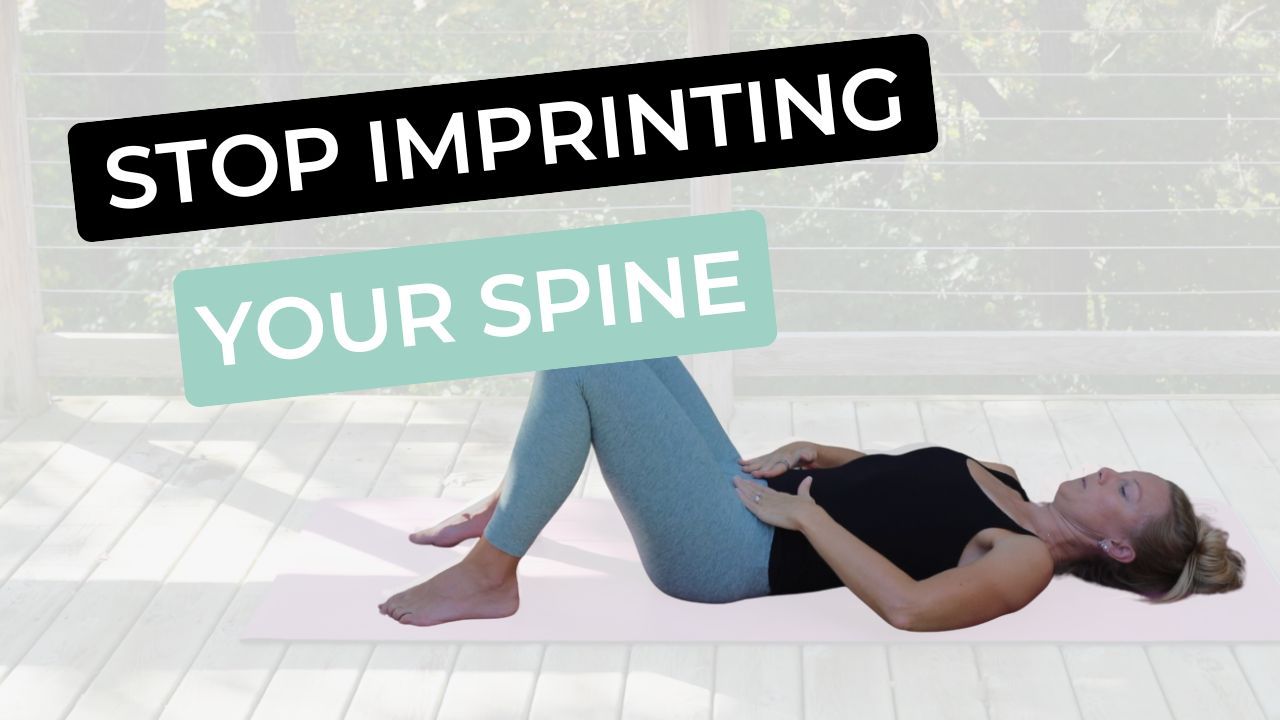
Why We Avoid Imprinting the Spine (and What to Do Instead)
If you’ve ever taken a Pilates class, barre class, or even a group fitness or weight training session, you’ve probably heard cues like “tuck your pelvis” or “push your lower back into the mat.”
This is commonly referred to as imprinting the spine — and it’s one of the most common questions I get from clients.
What Does “Imprinting” the Spine Mean?
Imprinting is when you flatten your lower back into the mat by tucking your pelvis under. The intention behind this cue is usually to “protect the back” or provide more support during exercises performed on your back.
While that idea sounds helpful in theory, this position can actually create more issues than it solves when used all the time.
The Real Issue With Imprinting
When you push your spine into the mat, the pressure in your body goes downward — into your lower back and into your pelvic floor.
What we actually want instead is:
-
a spine that feels long and decompressed
-
support that travels up through the crown of the head, not down into sensitive structures
Over time, constant imprinting can contribute to:
-
low back pain
-
pelvic floor dysfunction
-
excess tension in the hips
-
reduced mobility and inefficient core activation
Your body may feel like it’s “working,” but it’s often compensating instead of stabilizing well.
Neutral Spine (or Slightly Anterior) Is the Goal
Rather than forcing the back flat, I guide my clients toward a neutral pelvis — or for many women, even a slight anterior pelvic position if it feels good for their body.
Why?
Because this position allows the core and pelvic floor to function as they’re designed to — lifting and supporting from the inside, rather than bracing downward.
A Note on Men vs. Women
-
Women often feel their pelvic floor better with a slight anterior tilt due to a wider pelvis.
-
Men, with a narrower pelvis, typically do best staying closer to neutral.
There is no one-size-fits-all posture. The key is finding support without tension.
If You’ve Been Taught to Imprint for Years…
You don’t need to jump straight from a deeply tucked pelvis to a full anterior tilt.
For many people, the first step is simply:
👉 letting go of the pressure
Even if your back is still touching the mat, stop actively pushing it down. Notice how much tension you may be holding in your hips, pelvis, or lower back — and allow that area to soften.
From there, you can begin to:
-
feel the pelvic floor gently lifting
-
move your hips more freely
-
create space instead of compression
Movement should never feel jammed or forced.
The Rib Cage Matters More Than You Think
You can work on pelvic position all day long, but if your rib cage is restricted, progress will feel limited.
I see this all the time:
-
someone releases their pelvis
-
but the ribs flare or the mid-back overarches
-
creating the illusion of “neutral” without true support
Instead, think of a tug-of-war between the ribs and pelvis:
-
ribs softly wrapping and responding to the breath
-
chest lifting without flaring
-
shoulders relaxed
-
spine supported from the inside
It’s not about perfection — it’s about awareness and small, consistent adjustments.
Why This Matters Beyond the Mat
This concept doesn’t just apply to lying on your back.
Whether you’re:
-
sitting
-
standing
-
exercising
-
or moving through daily life
You want your body stacked over your sit bones, ribs lifted but relaxed, and your core doing the job of holding you upright — not gripping or bracing.
When pressure moves up, instead of down, your body feels lighter, stronger, and more connected.
Want Help Applying This to Your Own Body?
If this resonates with you and you’re ready to truly understand how to move, breathe, and stabilize your body better:
🌿 Start with Core Rehab
My Core Rehab Program is my signature foundational program and the best place to begin.
It teaches you:
-
how to find true core support
-
how to protect your back and pelvic floor
-
how to reduce aches and pains
-
how to move with confidence again
👉 Learn more about my Core Rehab Program here!
🎓 Go Deeper: Become a Core Athletica Movement Specialist
If you’re a movement professional — or you feel called to truly understand the why behind the work — this is where we go deep.
Inside my Core Athletica Instructor Training, we break down:
-
pelvic and rib cage mechanics
-
breathing and pressure management
-
posture, alignment, and movement patterns
-
how to cue clients safely and effectively
👉 Explore the Movement Specialist course here!


